








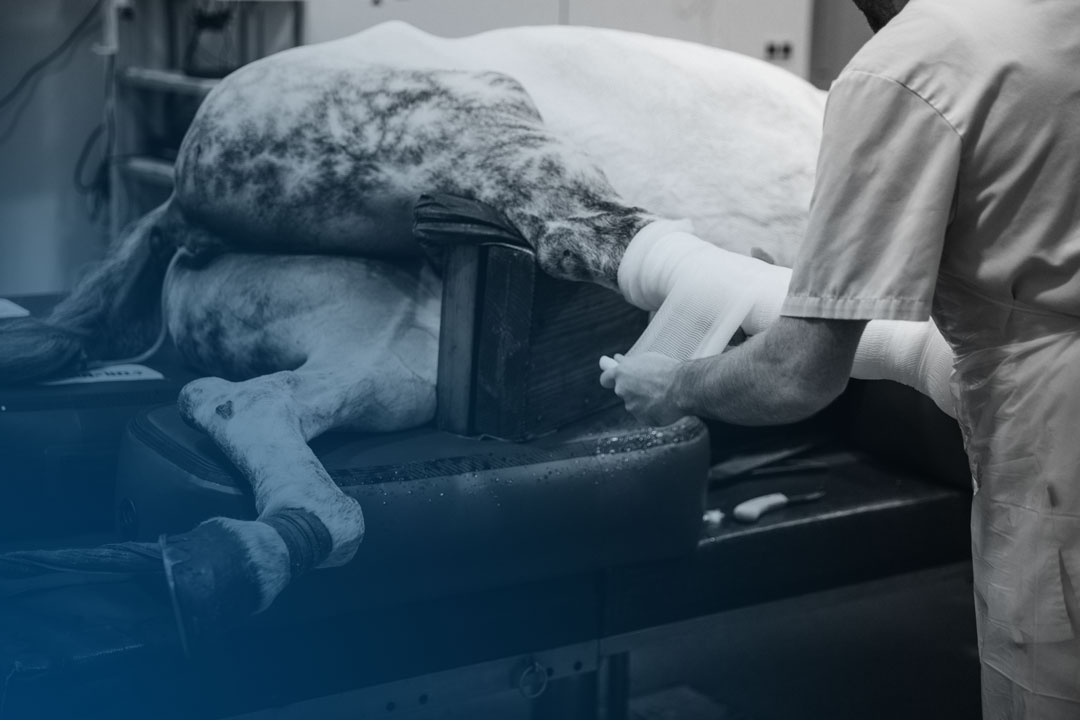
Although rarely discussed, the statistics are well documented: 32% of anaesthesia-related equine fatalities occur during the recovery phase—not during surgery itself. It is this critical stage that inspired the development of Equi-lift RC.
Why is general anaesthesia so risky for horses?
Unlike dogs and cats, horses are prey animals with an exceptionally strong flight instinct. As they regain consciousness, that instinct returns before their muscles and nervous system have fully recovered. The result is a 400–600 kg animal attempting to stand before it has regained proper coordination.
The combination of size, strength and impaired balance creates one of the highest-risk moments in equine medicine, requiring careful management by the veterinary team.
The most common complications during recovery
Post-anaesthetic myopathy
Extended periods on the operating table place continuous pressure on large muscle groups. When the horse attempts to stand, these damaged muscles cannot function normally, often leading to repeated falls that further aggravate the injury.
Post-anaesthetic neuropathy
Prolonged nerve compression during surgery may cause temporary sensory and motor deficits, leaving the horse unable to coordinate or properly control its limbs.
Fractures during recovery
Violent attempts to stand can result in fractures of the limbs, pelvis or vertebrae. These injuries are often catastrophic and may leave euthanasia as the only humane option.
Cardiovascular and respiratory complications
Reduced oxygen levels during recovery, combined with intense physical exertion, can trigger cardiac arrhythmias and acute respiratory compromise.
Traditional recovery methods and their limitations
For many years, the standard approach involved recovering horses in a padded recovery box while assisting them with ropes attached to the head and tail. Although still widely used, this method has significant limitations:
- Limited control: A distressed 500 kg horse cannot be safely controlled by human strength alone.
- Risk to veterinary staff: Team members remain vulnerable to serious injury during uncontrolled recovery attempts.
- Additional sedation: Extra sedatives are sometimes administered to slow recovery, potentially prolonging complications.
- No muscle support: Conventional methods do not relieve pressure on compressed muscles, increasing the risk of myopathy.
What happens during the first 45 minutes?
- The horse regains consciousness before full motor control has returned.
- Its flight instinct triggers premature attempts to stand.
- Each unsuccessful attempt increases the risk of injury and distress.
- Post-anaesthetic myopathy may develop or worsen with every fall.
- Cardiovascular stress is at its highest during this period.
Equi-lift RC: purpose-built for recovery
Equi-lift RC has been specifically developed to transform equine anaesthetic recovery from an unpredictable process into a controlled and significantly safer one.
Following surgery, the horse is positioned on the open, deflated Equi-lift RC cushion. Once correctly positioned, the inflatable structure is closed and gradually inflated. The horse is supported in a semi-standing position, with its limbs remaining in contact with the floor while much of its body weight is safely supported by the system.
As consciousness returns, the horse is able to stand progressively and under control, dramatically reducing the risk of violent falls and secondary injuries.
- Inflates in approximately 4–5 minutes.
- Helps reduce the risk of fractures and post-anaesthetic myopathy.
- Reduces stress for both the horse and the veterinary team.
- Compatible with all types of equine surgical procedures.
A safer solution for modern equine hospitals
Investing in a dedicated anaesthetic recovery system helps reduce post-operative mortality, improve staff safety and deliver better clinical outcomes for horse owners. As equine medicine continues to advance, Equi-lift RC also provides a valuable point of differentiation for practices committed to the highest standards of care.
To learn more about Equi-lift RC and the full Equi-lift range, contact our team.
